From a Cultural Café to a Global Call Sign
In a city better known for biryani and pearls, a small group of radio enthusiasts found an unlikely home in 2011 — not in a laboratory or a government building, but at Lamakaan, Hyderabad’s beloved “open space for the arts.” Lamakaan had already built a reputation as a free-spirited cultural centre, a place where poets, musicians, filmmakers, and theatre artists gathered to create without barriers. It was Ashhar Farhan, a lifelong radio ham and one of Lamakaan’s co-founders, who gave the venue one more identity: a meeting ground for people who talk to strangers across oceans using nothing but radio waves.
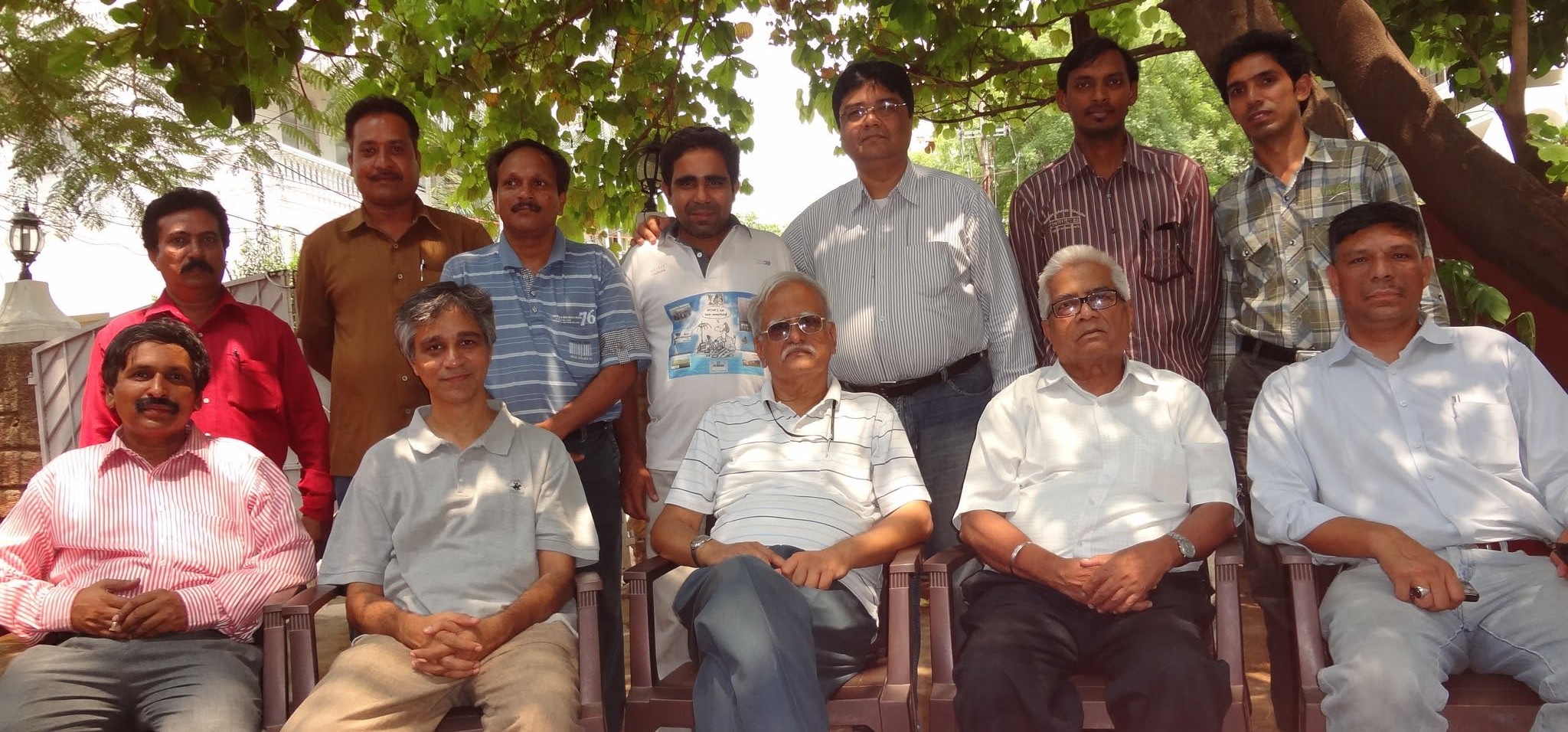
What began as informal Sunday gatherings of a handful of “hams” swapping stories about antennas and distant contacts slowly crystallised into something more permanent — the Lamakaan Amateur Radio Club, registered with the call sign VU2LCH. Its founding president was Krishnamurthy “Rajan” Nagarajan, VU2KNN, who had taught himself electronics from scratch and became known across the community as a master of homebrewing — the art of building your own radio equipment — and DXing, the sport of making contact with the farthest, rarest stations on earth. Rajan has since become a Silent Key, ham radio’s gentle term for a member who has passed away, but the club he helped shape still carries his self-taught, build-it-yourself spirit in everything it does.
That spirit found its loudest global echo through Ashhar Farhan himself. Operating as VU2ESE, Farhan designed the BITX — and later the wildly popular uBITX — open-source, low-cost transceivers that put amateur radio within reach of hobbyists who could never have afforded commercial gear. These designs, born out of Hyderabad tinkering, travelled the world, turning Lamakaan and its radio club into a reference point for homebrew radio enthusiasts on every continent.
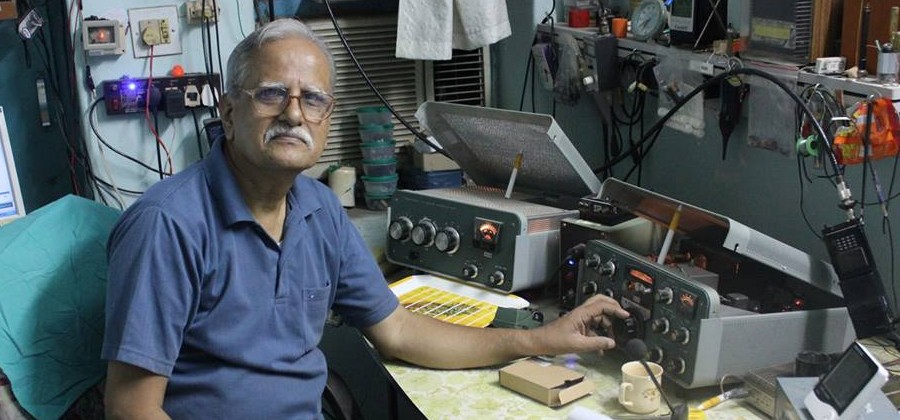
Today, LARC describes its mission simply: to promote amateur radio as a science, a sport, a social hobby, and a relaxing pastime. Its members are doctors, engineers, lawyers, economists, farmers, students, and businesspeople — proof that a shared frequency can flatten almost any social distance. The club keeps its community connected year-round through QSP, a quarterly journal exclusively for members, and through regular meets where seasoned hams mentor newcomers on everything from antenna design to satellite tracking.
But LARC’s signature achievement is the Lamakaan Annual Radio Convention, traditionally held on the second Saturday and Sunday of December at Muffakham Jah College of Engineering & Technology (MJCET) in Banjara Hills. The partnership with MJCET dates back to 2014, when LARC co-hosted Hamfest India (HFI-14) on the college campus to a record turnout — a relationship that has anchored the convention there ever since.
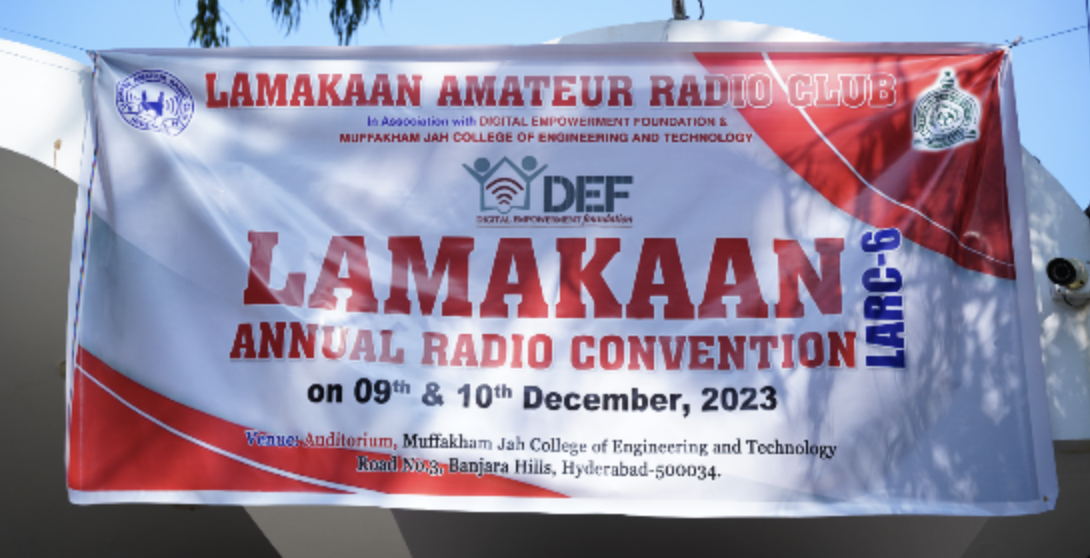
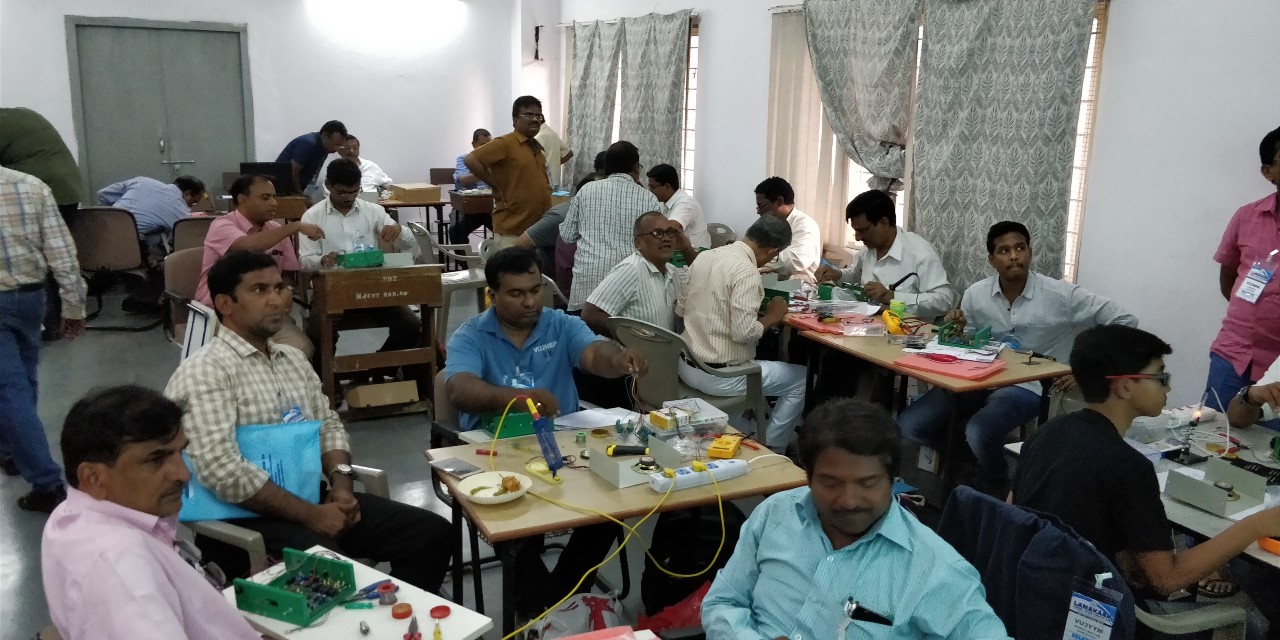
Each edition has grown more ambitious than the last. The 2019 convention drew more than 500 amateur radio operators from across India, with the QSP journal launch sharing the stage with technical talks on satellite communication, antenna fabrication, and homebrewing. By LARC-6 in December 2023, the convention had become a full-blown festival of radio: workshops on the uBITX version 6, deep dives into the QO-100 geostationary satellite power amplifier (a project with real Hyderabad fingerprints, since local hams contributed to developing the QO-100 up-converter), foxhunt and homebrew challenges, on-air contests, and a flea market where vintage transceivers changed hands alongside fresh-off-the-bench kits. LARC-7, held in December 2024, pushed further still — sBitx radios, QO-100 ground stations, and even hands-on sessions for working low-earth-orbit (LEO) satellites, drawing radio amateurs, electronics enthusiasts, and curious hobbyists alike.
The club’s reach isn’t confined to Hyderabad or even India. International ham radio media — from SolderSmoke’s long-running podcast and blog to dedicated outlets like It’s HAM Radio — regularly cover LARC’s conventions, workshops, and homebrew innovations, a testament to how a circle of friends meeting at a cultural café built something the global amateur radio community now watches closely.
From a handful of radio amateurs trading stories at an arts café to a club that helped seed a worldwide open-source radio movement and now fills a college campus with five hundred enthusiasts every December, the Lamakaan Amateur Radio Club’s story is, in many ways, the story of Hyderabad itself: inventive, generous with knowledge, and always happy to make room for one more voice on the channel.